Blog

How lasers revealed a lost city?

Deep in the Cambodian jungle lie the remains of a vast medieval city, which was hidden for centuries. New archaeological techniques are now revealing its secrets – including an elaborate network of temples and boulevards, and sophisticated engineering.

Angkor Wat temple

In April 1858 a young French explorer, Henri Mouhot, sailed from London to south-east Asia. For the next three years he travelled widely, discovering exotic jungle insects that still bear his name. Today he would be all but forgotten were it not for his journal, published in 1863, two years after he died of fever in Laos, aged just 35.

Mouhot’s account captured the public imagination, but not because of the beetles and spiders he found. Readers were gripped by his vivid descriptions of vast temples consumed by the jungle: Mouhot introduced the world to the lost medieval city of Angkor in Cambodia and its romantic, awe-inspiring splendour.

“One of these temples, a rival to that of Solomon, and erected by some ancient Michelangelo, might take an honourable place beside our most beautiful buildings. It is grander than anything left to us by Greece or Rome,” he wrote. His descriptions firmly established in popular culture the beguiling fantasy of swashbuckling explorers finding forgotten temples.

Today Cambodia is famous for these buildings. The largest, Angkor Wat, constructed around 1150, remains the biggest religious complex on Earth, covering an area four times larger than Vatican City. It attracts two million tourists a year and takes pride of place on Cambodia’s flag. But back in the 1860s Angkor Wat was virtually unheard of beyond local monks and villagers. The notion that this great temple was once surrounded by a city of nearly a million people was entirely unknown. It took over a century of gruelling archaeological fieldwork to fill in the map. The lost city of Angkor slowly began to reappear, street by street. But even then significant blanks remained. Then, last year, archaeologists announced a series of new discoveries – about Angkor, and an even older city hidden deep in the jungle beyond.

An international team, led by the University of Sydney’s Dr Damian Evans, had mapped 370 sq km around Angkor in unprecedented detail – no mean feat given the density of the jungle and the prevalence of landmines from Cambodia’s civil war. Yet the entire survey took less than two weeks.

Their secret?

Lidar – a sophisticated remote sensing technology that is revolutionising archaeology, especially in the tropics. Mounted on a helicopter criss-crossing the countryside, the team’s lidar device fired a million laser beams every four seconds through the jungle canopy, recording minute variations in ground surface topography. The findings were staggering.

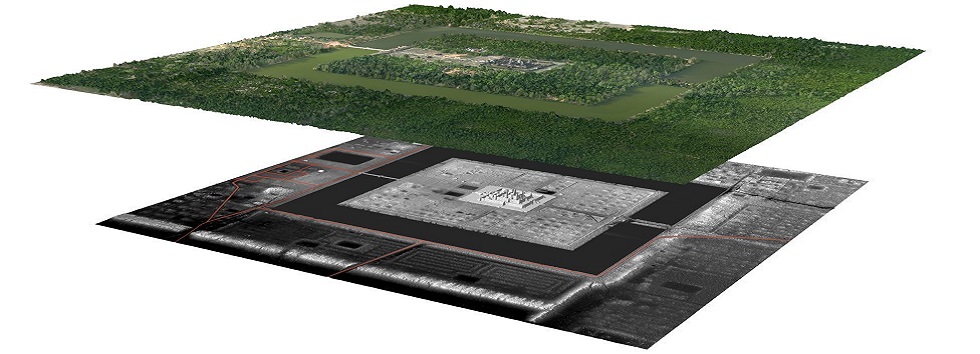
Image showing what is beneath the ground at Angkor
Lidar technology has revealed the original city of Angkor – red lines indicate modern features including roads and canals

The archaeologists found undocumented cityscapes etched on to the forest floor, with temples, highways and elaborate waterways spreading across the landscape. “You have this kind of sudden eureka moment where you bring the data up on screen the first time and there it is – this ancient city very clearly in front of you,” says Dr Evans. These new discoveries have profoundly transformed our understanding of Angkor, the greatest medieval city on Earth.

Phra Sav Ling Povn, palace of the leprous king, near the great temple of Angkor Wat, circa 1930
Phra Sav Ling Povn, palace of the leprous king, near Angkor Wat, circa 1930

At its peak, in the late 12th Century, Angkor was a bustling metropolis covering 1,000 sq km. (It would be another 700 years before London reached a similar size.)

Angkor was once the capital of the mighty Khmer empire which, ruled by warrior kings, dominated the region for centuries – covering all of present-day Cambodia and much of Vietnam, Laos, Thailand and Myanmar. But its origins and birthplace have long been shrouded in mystery.

A few meagre inscriptions suggested the empire was founded in the early 9th Century by a great king, Jayavarman II, and that his original capital, Mahendraparvata, was somewhere in the Kulen hills, a forested plateau north-east of the site on which Angkor would later be built.

But no-one knew for sure – until the lidar team arrived. The lidar survey of the hills revealed ghostly outlines on the forest floor of unknown temples and an elaborate and utterly unexpected grid of ceremonial boulevards, dykes and man-made ponds – a lost city, found.

Relief map of Mahendraparvata

Most striking of all was evidence of large-scale hydraulic engineering, the defining signature of the Khmer empire.

By the time the royal capital moved south to Angkor around the end of the 9th Century, Khmer engineers were storing and distributing vast quantities of precious seasonal monsoon water using a complex network of huge canals and reservoirs. Harnessing the monsoon provided food security – and made the ruling elite fantastically rich. For the next three centuries they channelled their wealth into the greatest concentration of temples on Earth.

One temple, Preah Khan, constructed in 1191, contained 60t of gold. Its value today would be about £2bn ($3.3bn). But despite the city’s immense wealth, trouble was brewing. At the same time that Angkor’s temple-building programme peaked, its vital hydraulic network was falling into disrepair – at the worst possible moment.

The end of the medieval period saw dramatic shifts in climate across south-east Asia. Tree ring samples record sudden fluctuations between extreme dry and wet conditions – and the lidar map reveals catastrophic flood damage to the city’s vital water network. With this lifeline in tatters, Angkor entered a spiral of decline from which it never recovered.

In the 15th Century, the Khmer kings abandoned their city and moved to the coast. They built a new city, Phnom Penh, the present-day capital of Cambodia. Life in Angkor slowly ebbed away.

Angkor Wat

When Mouhot arrived he found only the great stone temples, many of them in a perilous state of disrepair. Nearly everything else – from common houses to royal palaces, all of which were constructed of wood – had rotted away. The vast metropolis that once surrounded the temples had been all but devoured by the jungle.

Reference: http://www.bbc.com/news/magazine-29245289

How scientific societies can build better nations!

Scientific societies in the developing world must take a stake in their countries’ future. They should be proactive in fostering a culture supportive of economic development driven by science and technology.

In many developing countries, science is treated as a marginal activity, or even as an adornment, to quote the Pakistani Nobel prizewinning physicist Abdus Salam. It is, then, hardly surprising that the tradition of scientific societies has not taken deep root. Very few are as active as their Western counterparts, and fewer still have international stature. This partly explains why many developing countries have been slow to gain economic benefit from advances in science and technology.

Scientific societies are deeply embedded in Western culture. In the two centuries following the establishment, in 1660, of the pioneering Royal Society in the United Kingdom, most of the countries of Europe and North America followed suit. These non-governmental organizations — professional bodies with altruistic objectives — have worked selflessly to promote the public understanding of science and raise the status of scientific disciplines and professions. The evolution of a scientific culture in the West has been due in no small measure to the efforts of these societies. They are highly regarded by the establishment and their views command respect. The societies are also vigorous publishers of scientific journals, contributing to the quality of research.

In the developing world, the desired levels of economic success are still elusive, despite prudent initiatives such as encouraging foreign investment, promoting industrialization, instituting macroeconomic reforms, and emphasizing research and technological education. With the approach of the third millennium, and the recognition that science and technology are agents for change, we must ensure that developing countries are not further isolated from the global economic mainstream. The scientific community has a responsibility in this regard.

The Western experience shows that scientific societies in developing countries have much to contribute to nation building. In the case of Singapore, the scientific community recognized the importance of scientific societies in nation building soon after independence in 1965. Since then, the Singapore National Academy of Science and its scientific societies have been proactive in complementing the government’s efforts in the cause of development. They promote numerous annual programmes aimed at a national audience, including science festivals, science olympiads, mathematics olympiads, science and technology competitions, badge schemes for student project work in 12 disciplines, lectures and many other activities.

The effectiveness of these programmes in spreading a culture supportive of science and technology among the public in general and students in particular is well acknowledged. Funding has been a major but not insurmountable issue in implementing awareness programmes. The problem of scarce funding has been overcome by pooling expertise and resources and cultivating a spirit of commitment, enthusiasm and volunteering among society members. Alliances with government and private corporations have been forged. In parallel with its public programmes, the scholarly activities of the academy and its societies have raised the profile of the disciplines and professions they espouse.

It seems to us that scientific societies in developing countries are well positioned to help bring about a culture supportive of science- and technology-driven development through public initiatives and other measures. Representing a concentration of expertise and intellectual resources, they are in a position to take an equity stake in their countries’ futures. Although a lack of funds is one reason why such societies have not maximized their potential, this can be more than made up for by partnerships with government organizations and private corporations, as well as by tapping the large work-forces of these countries. This would have the effect of strengthening existing institutions and enhancing their stature.
The success of general scientific societies in the West has led to the proliferation of more specialized societies catering to diverse interests and objectives. Many have regional branches, and these have helped to enhance their reach and effectiveness. The scientific intelligentsia in developing countries can emulate such measures.

More importantly, scientific societies can be established without the need for institutional infrastructure, official sanction or massive funding. It just requires the coming together of a core group of scientists committed to translating a vision into reality. Nearly three decades after its birth, the Singapore National Academy of Science and its affiliates have still not found it necessary to have permanent premises, despite their wide range of activities.

There needs to be more support for scientific societies from international aid agencies such as the United Nations Educational, Scientific and Cultural Organization, the World Bank, the International Monetary Fund and the rich countries that provide aid to the Third World. Indeed, such agencies should give modest annual grants to learned societies in developing countries. Over 70% of the support for science and technology in Africa comes from foreign aid. Even if only a small percentage of this went to scientific societies, it would be a tremendous help. Support and encouragement would establish new partnerships, thereby catalysing development. It would also further energize the scientific intelligentsia in developing countries for a noble cause, and accelerate the creation of institutions of creditable standing out of such scientific societies.

As Salam noted, “It is basically mastery and utilization of science and technology that distinguishes the South from the North.” It is time for scientific societies in developing countries to help to close that gap by taking on a higher profile.

Authors: Leo Tan Wee Hin and R. Subramaniam
Reference and Credits: Nature, 17 June 1999, Vol 399, page 633.

Building Innovative India of the 21st Century

We have an opportunity to start the resurgence of an innovative India today. This will not only entail building new social, legal and economic structures that support innovation, but also making a national symbol of ‘I’ in ‘India’ to stand for ‘Innovation’.

Everyone recognizes that twenty first century is the ‘Century of Knowledge’. Nations, which lead in production of knowledge, its dissemination, its conversion into wealth and social good and its protection have assumed a leadership position in the world today. But it must be recognized that knowledge without innovation is of no value. It is through the process of innovation alone that new knowledge can be created. It is innovation, which converts into wealth and social good. India was a leader in innovation several centuries ago.

Since the Indus Valley Civilisation of about 5000 years ago, innovation has been the part of the Indian culture, and the basis of its civilization. Our great innovations included remarkable town planning, the use of standardized burnt bricks for dwelling houses and interlinked drainage system. It included wheel-turned ceramics and solid-wheeled carts. The dockyard at Lothal is regarded as the largest maritime structure ever built by a bronze-age community. The discovery of zero and the decimal-place value system by Indians dates back to the Vedic. Later pioneering work in algebra, trigonometry and geometry is outstanding.

The innovations in medicine not only aimed at the cure of diseases but more importantly, on the preservation of health. The innovations in surgery including laparotomy, lithotomy and plastic surgery. The iron pillar at Delhi which testifies to the achievements in metallurgy some 1500 years ago, is truly inspirational.

It is clear that Indian civilization was characterized by scientific thought, capabilities and techniques, at levels for more advanced than others.However, when the scientific and industrial revolutions took place in the west a few hundred years ago, there was a period of stagnation in India because of developments in society leading to a highly feudalistic structure. Lack of development over this period was a result of a hierarchic approach, irrational subjective thinking, and build up of superstitions and superficial ritualism. The earlier great traditions were allowed to decay. It was in this state of its society that India came under colonial domination. During the colonial British period, development in science happened because of the efforts of a large number of outstanding Indians, who worked over the three quarters of the century prior to Indian independence. They include names such as Sir C.V.Raman, J.C.Bose, S.N.Bose, P.Mahalanobis and so on, a spectacular array of thinkers. These were the products of the ferment in Indian society which motivated the freedom struggle.

We have an opportunity to start the resurgence of an innovative India today. This will not only entail building new social, legal and economic structures that support innovation, but also making a national symbol of ‘I’ in ‘India’ to stand for ‘Innovation’. I am convinced that just as we had launched a freedom movement, which freed us from the stronghold of foreign powers, we must launch an ‘Indian Innovation Movement’ now, so that India can assume its rightful place in the comity of nations. And the time to do it is now, at the dawn of the new millennium.

Our confidence in building the new India of our dreams stems from our major successes in the technological arena. Some prominent examples include the blue (space), green (agriculture), white (milk) and gray (software) revolutions. The Indian space program, for example, has designed and sent into space a series of satellites that, among other things, comprise the largest domestic communication system in theAsia-Pacific Region. It has also developed a range of launch, the most recent being a geo-synchronous launch vehicle with an 1800 kg payload.

These developments have helped in the application of space technology for national needs such as communication, meteorology, broadcasting, and remote sensing.

Other innovations serving specific Indian needs include C-DOT digital switches, CorDECT cost-effective wireless-local-loop products, the Simputer low-cost computer and the Param supercomputer. The last is an example of “denial-driven innovation,” illustrating that India has the potential to tackle highly advanced technological issues, given the proper motivation.

The landscape of technology innovation in India is not static. It is continuously evolving. It has undergone a number of positive developments over the past decade. Let us reflect on some of these. There has been a paradigm shift that is reflected in a move from research as an end in itself to research coupled with technology development, with this linkage being increasingly driven by socio-economic needs. The perspective has also shifted from primarily local/national to a global one, with the globalization of R&D being a major driving force. This has resulted in some major transitions: for example, the pharmaceutical sector that was based on formulations of imported drugs in the 1960s has slowly enhanced its innovative capabilities and is now gearing up to compete in a global IP regime. Similarly, the catalyst program at the National Chemical Laboratory in CSIR has evolved from reverse engineering in the 1970s to exporting technologies and products by the mid 1990s.

Technology entrepreneurship has begun to establish itself. While creation of high-technology start-ups has been dominated so far by information technology services and software, there is also activity in knowledge-intensive sectors such as biotechnology and IT-hardware. There is also anemergence of innovative models of entrepreneurship. The TeNeT group at IIT Madras, for example, has spun off – with faculty, student and alumni involvement – a series of firms that are engaged in a range of activities from IT product development to provision of technology-based services.

Geography is an important factor and issue in innovation. Cities such as Bangalore, Hyderabad, Pune, and Chennai have emerged as high-growth centers. This emergence is partly catalyzed by social transformations in these areas; innovation, in turn, also plays a positive role in social transformations. This can set up a dynamic that may produce increasing divergence between various parts of the country leading to an innovation divide as well as a socio-economic divide. Such a divide could have major political and social implications. We must avoid it at all costs.

India has numerous major assets for technological innovation. On the human resource front, the country has the largest pool of qualified engineers in the world, the 7th largest pool of R&D personnel, and a large cadre of expatriate scientists, technologists, and entrepreneurs who are increasingly engaged with their home country. On the institutional front, India’s assets include numerous institutions of higher learning as well as an impressive array of research centers and laboratories that focus on a large range of scientific and technical issues. India has a huge domestic market, with potential customers numbering in the hundreds of millions, and an economy that has grown at almost 6% per year over the last decade. There are energetic individuals within the government, academia, and the business domain who are promoting and catalyzing institutional transformation (both revolutionary and evolutionary) in a range of ways. There are increasing numbers of individuals, both within the country as well as outside it, who serve as role models for technology entrepreneurship. Many ofthese individuals are also actively engaged in directly promoting entrepreneurship. India also has the key advantage of broad familiarity with English as a medium of communication. We must leverage all these to catapult India to the top position.

Youth represents the national strength, vitality and vigour. Therefore, this young India will play a crucial role in the development and upliftment of the nation. If properly moulded, the youth can become the champion of our culture, custodian of our national pride and a trustee of the freedom of the country. But the process of such moulding requires the right type of education right from childhood. Our youth must imbibe the spirit of a true innovator. Innovators are those who do not know that it cannot be done. Innovators are also those who see what everyone else sees, but think of what no one else thinks. Innovators refuse status quo, they convert inspirations into solutions and ideas into products. Building such innovators will require an all-pervasive attitudinal change towards life and work – a shift from a culture of drift to a culture of dynamism, from a culture of idle prattle to a culture of thought and work, from diffidence to confidence, from despair to hope. Revival of Indian creativity and the innovative spirit needs to be made into a national movement today, in the same spirit and on the same scale as marked our freedom struggle.

We must direct our technology innovations for solving the major problems that the nation faces today. For example, we have about 200 million adults that cannot read and write. We reinforce our doubts by saying that illiteracy today is reducing only at the rate of 1.5% per annum. We have constraints of trained teachers. The use of conventional methods of learning from alphabets to words, which requires 200 hours of instruction. We will need 20 years to attain a literacy level of 95%. By this time, other nations would have moved ahead. We, therefore, mustfind out new innovative ways of solving the problem. Look at what the great doyen of Indian IT industry, F.C Kohli has done. He has developed a Computer-based Functional Literacy (CBFL) method. It focuses on the reading ability. It is based on the theories of cognition, language and communication. In this method, the scripted graphic patterns, icons and images are recognized through a combination of auditory and visual experiences by using computers. The method emphasizes on learning words rather than alphabets. While the method focuses on reading, it acts as a trigger for people to learn to write on their own.

Based on this method, Kohli’s team has developed innovative methodologies using IT and computers to build reading capability. This experiment was first conducted in Medak village near Hyderabad. Without a trained teacher, the women started reading the newspaper in Telugu in 8 to 10 weeks. Thereafter, Kohli’s team carried out more experiments at 80 centres, and with over 1000 adult participants. The results were spectacular.

Kohli is an engineer. He is pragmatic. He believes in action, in deliverables. His team developed these lessons to run on Intel 486s and earlier versions of Pentium PCs modified to display multimedia. There are around 200 million of such PCs in the world that are obsolete. They have been discarded. By using these PCs, the cost of making one person literate would be less than Rs.100. With CBFL, Kohli says he can increase literacy to 90 to 95% within 3 to 5 years, instead of 20 years. Should we not believe Kohli? Should we not give a chance to his team? Should we not remove the darkness of our illiteracy by lighting such innovative candles? Yes, we can. Provided we think positively. Provided, we believe it can be done.

What do global giants like General Electric and Motorola have in common with a humble tiffin delivery network comprising 3500 dabbawallas, who deliver 1.5 lakh lunch boxes tocitizens in Mumbai each day? The dabbawallas have the six sigma rating or an efficiency rating of 99.999999, which means one error in one million transactions. This rating has been given to them by Forbes Global, the famous American business weekly. Now, these are largely illiterate dabbawallas. Their secret lies in a coding system devised over the years. Each dabba is marked in an indelible ink with an alphanumeric code of about 10 characters. In terms of price and the reliability of delivery, say compared to a Federal Express System, dabbawallas remain unbeatable. Their business models have become a class room study in some management institutes. By giving this one example, all that I am trying to convey is that the innovative potential of the people does not plummet to zero, when the people are illiterate or semi-literate. They necessarily have to innovate to survive and to succeed. There is a plenty of cheer there too. We must be prepared to discover it and salute it.

One of the major challenges before the nation is that of inducing creative thinking amongst our young people. The young budding inventors can learn a lot from the legendary career of the inventor Thomas Alva Edison. He was granted a record of 1,093 patents for inventions ranging from light bulb, typewriter and electric pen to his phonograph and motion-picture camera. His career illustrates how creativity can be cultivated. His work methods reveal that the real keys to unlocking creativity are an open-minded approach to learning and perseverance. Edison used his creativity not only for developing new inventions but also for bringing them to the market and winning out financially over competitors.

When Edison died in 1931, he left 3500 note books which read like a turbulent brainstorm. It shows Edison’s mind at work spanning most of his six-decade career. They offer fresh clues as to how Edison, who received virtually no formal education, could achieve such an astoundingunrivalled record of inventiveness. The notebooks illustrate how Edison conceived his ideas from their earliest inceptions and show in great detail how he developed and implemented them.

How do ideas get generated? Curiosity provides the stimulus for the production of ideas. Curiosity prompts us to ask questions and explore further. As Einstein said “He who cannot wonder, cannot feel curious about things around him, is as good as dead, a snuffed-out candle”. Edison was curios and therefore he could generate new ideas.

Edison felt that his lack of formal education was, in fact, a ‘blessing’. This enabled him to approach his work with far fewer assumptions than his more educated competitors, who included many theoretical scientists, renowned doctorates and engineers. He approached any idea or experience with wild enthusiasm and was prepared to try anything out of ordinary material.

When an experiment failed, Edison would always ask what the failure revealed and would enthusiastically record what he had learnt. He had an enormous talent for appropriating ideas that may have failed in one instance and using them for something else. Whenever he succeeded with a new idea, he would review his notebooks to rethink ideas and inventions abandoned in the past in light of what was recently learnt. He would often jot down ideas others had come up with in other fields.

The lessons that we learn from Edison’s life are simple. First, challenge the assumptions continuously. Do not have a preset or prejudiced mind. Let the windows of your mind be always open. Second, patience and perseverance pays. Third, nothing is final. Strive for creating products that are better than the best. And displace your products yourself. Finally, you can learn more from your failures than you can from your successes. So do not be afraid to fail. Take risks.

Indeed, risk taking must become a part of the innovation policy of firms. Innovativeinstitutions have no place for those who preserve the systems in a pre-fabricated and unaltered way. A friend of mine, who is a CEO of a company from abroad, once said ‘we do not shoot people, who make mistakes. We shoot people who do not take risks. What do you do?’ I said, ‘In India, we shoot people, who take risks!
In science, only those are remembered, who say either the first word in science or the last word in science. India has not done it often enough. Why? Because, among other things, we have not dared, risked, gambled or deliberately funded risky research. While I was the Director of National Chemical Laboratory, I decided to fund risky research by creating a ‘Kite Flying Fund’. I said, we will support ideas, which aim to attain some unattainable goals, meet some stretched targets, or follow novel strategies in problem solving, that have never been used before. Here the chance of success may be one in one thousand. This fund generated a lot of excitement. I remember a fierce competition among scientists, where many innovative ideas sprang up.

When I moved to CSIR, we used the ‘Kite Flying Fund’ concept at NCL to create a ‘New Idea Fund’. We invited the entire chain of laboratories to submit ideas, which had explosive creativity, and where the chance of success may again be even one in thousand. During the last 5 years we have received over 350 new ideas but we have funded only 15 of them; we are so tough on our criteria on what constitutes explosive creativity. This initiative has spurred our scientists to aim for increasingly higher level of innovation in CSIR and even individual laboratories are setting up such funds now.

We must also understand that the challenge is not only that of funding risky ideas, but also spotting and funding mavericks, who have the potential to create breakthroughs. Such unusual innovators refuse to preserve status quo. Whereas standard science managementpractices tend to avoid conflicts, such people create conflicts. They bring in unusual spontaneity and exceptionality to the table. Their incentives are personal and emotional. They are not institutional or financial. Such innovators are sometimes extremely intense. Great innovators like Carother, who developed world’s first synthetic fibre nylon, committed suicide. Diesel, who invented diesel engine, also committed suicide. Managing such intense and creative people requires a subtle understanding of the pain of creation that such people undergo day in and day out.

As Feynman has said, ‘whatever we are allowed to imagine in science has to be consistent with everything else that we know. The problem of creating something which is new, but which is consistent with everything which has been seen before, is one of extreme difficulty’. At the same time, the difficulty with science is often not with the new ideas, but in escaping the old ones. A certain amount of irreverence is essential for creative pursuit in science. I believe that if we promote that irreverence in Indian science, by change of personal attitudes, change of funding patterns, creating that extra space for risk taking, respecting the occasional mavericks and rewarding the risk takers, then not only will the fun & joy of doing science will increase, but also Indian science will make that difference, that “much awaited” difference.

Innovative India of the future must be compassionate. It should continuously look at the problems of the poor and we should ask as to why the design of a pulley to draw water from a well remained unchanged for two thousand years? Millions of women in drawing water from wells, feel fatigued and sometimes need to rest to catch their breath. But all this time, they have to keep holding the rope with a water-filled bucket or vessel tied to it. Not surprisingly all it takes is a momentary loosening of one’s grip to result in thebucket falling into the well. Although communities have devised ways of retrieving a fallen bucket out of well, for example, by using hooks tied to another rope, this did not prevent the bucket falling into the well. This was the situation until an artisan when posed with this challenge solved this problem by attaching a small lever on the pulley. The lever did not get in the way while pulling on the rope, but the moment the tension on the rope slackened, the lever pressed against it and arrested the downward movement thus keeping the water-filled bucket in its position. Now an old lady or an ill person could take rest, chat and then resume the pulling operation.

Thousands of such pulleys are now being installed all across the Gujrat Villages. These designs will spread to the rest of India soon. Can you imagine the relief this will bring to millions of poor women, who draw water from wells in India everyday.
Why did such problems that affect millions of people every day not get solve through the use of the existing scientific models? This example challenges us to consider the changes we need to make in the way scientists are taught and trained so that we do not so to say throw the baby out with bathwater. In other words we do not in any way seek to alienate the outstanding scientists that we do have in various disciplines in at least some of our countries. Rather the aim is to harness their talent so as to add value to the local, indigenous ability to solve problems. In the example of this pulley, we should remember that navigators had used a similar concept while pulling the ropes in setting oars in the boats, and a chain pulley system in the construction industry also used similar concepts. Thus the concept was not new but its application in a real life problem did not happen. This shows that the problems that society faces did not receive as much attention in the formal science programs. While it is possible that the problem was with the societythat it did not push for its problems getting addressed. Or equally possible it may be the way the scientist was taught and trained that is the problem stemming from little encouragement to pursue science that solves every day problems while at the same time extending the frontiers of science.

We must create a new value system, where problem solving for the poor and the disadvantaged becomes the mission, and those who contribute to it are made into the national heroes. That is why an illiterate artisan, who developed this pulley system was acknowledged and rewarded by the National Innovation Foundation that was set up under my Chairmanship last year. We need more such innovations, which will solve the problems of the poor.

Technologies developed by local artisans, craftsmen, potters, farmers, weavers, etc. are considered as traditional. These technologies are never included in the fabric of modern technology. Again a change of mindset and value systems is required. I tried an experiment in Pune during the Indian Science Congress in January 2000. As President of the Science Congress, I said let this Science Congress be ‘knowledge congress’. Let it be ‘people’s congress’. We will show that we value people’s knowledge. We had several grass root innovators participate in our science exhibition. They demonstrated their technologies. None of them spoke English. We had a session, where they made a presentation on their technologies in local languages to around 2000 scientists. They stood on the same platform from which the Nobel Laureates spoke. I must say that they got a bigger applause than even the Nobel Laureates. I believe the scientists, for the first time, realised the power of innovation that takes place in the field. They also saw the innovative and creative abilities of those, who were unadulterated by the modern day educational system. Can this realization now turn to respect and then to meaningfulpartnership? CSIR is forging such partnerships. Let me share one of them with you.

Dr. Mashelkar delivered this speech at the G. Ram Reddy Memorial Lecture at The Indira Gandhi National Open University, New Delhi

Challenges in Science and Technology

It is indeed a great privilege to be invited to deliver the 19th Dr. Vikram Sarabhai Memorial Lecture, I thank the organizers, especially Praful Anubhai, who called me here. I am delighted to see so many friends. It is always good to be back home. I have jotted down ten, twenty points, which I would like to share with you. The topic I have selected –‘The challenges in Science and Technology’ – may perhaps be too broad and too vague for many in the audience. I would like to pay great tribute to Dr.Sarabhai at this point in time when we are going through liberalization, privatisation and globalsation; It could be a good idea to review science and technology once again, put it in the right perspective, reflect on what is going to come ahead of us and how we have done in the past. I do not have lots of figures and charts or statistical information. I am going to speak more from my heart about the purpose, the process and the people.

Dr.Sarabhai was a leading personality with an unique blend of science, social consciousness, entrepreneurship, energy, enthusiasm, vision and value. It is hard to find an individual with proper blend of all of these unique qualities. His contribution to science and technology is well-recognized world over. He has given India a great deal of strength in space, atomic energy and communication, which happens to be the field I specialise in. I saw him when I was eighteen and a student of physics in M.S.University, Baroda where he came to deliver a lecture. I had at that time just about five microseconds of interaction with him. Never in my wildest imagination did I think that thirty-five years thereafter I would be coming to Ahmedabad to deliver the Vikram Sarabhai Memorial lecture. I will talk about the challenges in science and technology in two levels global and national.

At the global level I would like to focus on images of the twentieth century that come to my mind, its relation to science and technology. Look at general trends as I see it today as we enter the 21st century, talk about three or four key technologies of the future and then identify ten key global changes that I down the road for the next twenty, thirty years to come. At the national level, I would like to examine what has happened in the last 45-50 years after independence, look at the scene today in science and technology and thereafter identify ten key issues that I see as challenges for future in science and technology

When I think of 20th century, I look at three important phase’s colonization, national freedom and global markets (free economy and globalisation of trade and technology). The images that come to my mind reflect Holocaust, Hiroshima, Apartheid, World War, poverty, ignorance, Environmental Blunders and Quest & Desire for peace and prosperity at all levels. In the 20th century we have also effected a major transition, moving from the capital-intensive industrial base to knowledge intensive information base. These images reflect a whole lot of developments in technology in this century. The greatest strides have been made in electronics, and biotechnology. Electronics has essentially transformed the global scene in the last seventy years, whether it is microprocessor, fibre optics, satellites, television, telephones, computer information or medical instruments. Everything today that has to do with electronics has become pervasive. On an average, today in U.S. homes, many of the equipment’s they use incorporate a motor-blenders, washers, dryers, garage door opener. Etc.. whose presence people won’t even realise technology has become so pervaisve that we are into even conscious of the fact that is around us all the time. The DNA and the entire molecular biology has opened whole new set of opportunities. Look at transportation. For my father who lived in a village and never saw a train it was very difficult for him to conceptualise what trains would be like and so, in his first travel form Halward to Viramgam he was trying to visualise what the train would be like, who would be pulling it, how he would sit, how many people would be there, etc, which he used to describe to me. For him, it was fascinating. Now, he says: “I came to U.S. in 747”: look at the transformation in one’s lifetime. What has happened to all of us in the last fifty years in absolutely remarkable, but once again we take all these things for granted.

Unfortunately in the 20th century technology has been used for destruction as well as for development. Lot of time, energy, money and resource’s have gone into building defence infrastructure. This colonial mind-set carried with us lot of baggage’s. World War divided countries into ideologies and we created iron curtains and walls and started spending billions and billions in building defence warheads. Scientists spent their lifetime in building nuclear bombs, missiles, space wars, star-wars, ignoring at the same time fundamental development. It was an unique mixture of destruction and development that the scientists were asked to work on. Quality of life as a result has suffered. The standard of living has increased but I have my own doubt about quality of life in many areas

Most of the research in science and technology in the 20th century was funded by government programmes.-weather it was for basic science or for application of science . When President Kennedy said that he would like to take man to the moon, it required tens of billions of dollars and there were fall-outs of this research into microelectronics, calculators and things like that which people don’t even recognize. Government funded research has delivered whole lot of technology for destruction on one hand and development on the other. In the process, I also find, I also find, especially in the Western world, that people are disconnected. Communication technology is supposed to connect people: it is beginning to connect people to machines, but not people to people. A young kid in U.S. knows how to deal with computer networks but does not know how to play with his next-door neighbour, so technology does bring in some level of problems. Some use technology, some abuse technology. The main idea behind technology has been to increase comforts, helps us in doing things outside of our body, but unfortunately for many developing countries technology is seen as something exotic fancy, foreign, alien, sexy and not necessarily problem solving. Technology is problem solving and there is technology in everything we do. Many of my friends in social science always criticize me saying” You are attacking” “Of course I am. That’s all I know”. “You look at things only form the view point of management and technology”. ”Well, that is the only pair of glasses I wear” But the same people use telephones computers, watch TV, and travel on aeroplanes without accepting the fact that they are indeed enjoying the fruits of technology in their day to day life.

I see the following important trends in technology based on what I have seen in the 20th century:

Ø      Everything is being miniaturised, from micro-motors to micro-electronics.

Ø     Ever technology is pushing for productivity, and efficiency in all sectors, and is used to increase these.

Ø     Technology is being used to reduce cost. Only by reducing cost you can bring technology to the doorstep of many more people

Ø     Technologies are becoming environment friendly. People are now becoming conscious of environment friendly technologies in everything they do. For example take the ‘Yellow Pages’. In the city of Chicago, there are about six million telephones and the telephone directories (three volumes) if stacked together, will be 1.5 feet in height. Just to print and distribute 8 million of these directories to each, imagine the number of trees that are cut every year! Do we really need it? Who uses those Yellow Pages? Now, all of sudden we are conscious of all these things when it is too late in many cases.

Ø     Standardisation : Only through standardisation you can increase markets, reduce cost thereby giving accessibility to large number of people

Ø     In technology, people are now beginning to recognize the importance of time. Time has become a very very important resource and people are learning to link time and technology. In time inventory, there is a classical example. You are trying to optimise time and time is becoming a great weapon for competitiveness

Ø     Technology is increasing comforts as a result, a whole new ‘leisure industry’ is being developed. And there are products for the ‘leisure industry’

Ø     There is an increase in automation to increase productivity, reduce cost and eliminate labour (thereby creating unemployment)

Ø     Technology is going to be so pervasive that we will, over a period of time, not even recognise that all these complex technologies are around us, in our pockets. People are talking about ‘electronic cash’. They ask, ”do we really need to print all these money? If we don’t need to print directories, why do we need to print all this money?”. Later on I will talk about a patent that I have just filed.

 These are the trends that I see. And based on these trends, I see ten challenges for technology at global level.

  1. To convert the entire defence and destruction based industry to sustainable development: This is going to be very very difficult task. In Russia I find that all those huge plants are sitting idle nothing to do: no orders. Their mind is all set only for defence industry and they just don’t have ideas on how to transform this industry building Tanks into, for example, Telecom. This is happening not just in Russia but it is equally true for America. While developing world is increasing expenditure on defence, same people now who have cerate peace world over are selling defence equipment to poorer countries who can’t afford. So, there is a big challenge her to bring this out in front and recognize the fact that this going to be the biggest challenge in the next 50 years, to transform and convert defence industry into sustainable development
  2. To expedite the application of technology to meet basic human needs: We have not paid much attention to the technology applications for drinking water, literacy, immunization, housing, sanitation, mainly because all of these technologies in the last 100 years have developed in the western world. And there is nothing Eastern about any of these technologies. Not a thing, Japanese have not invented anything. Indians have not invented anything. East that talks about the glory of the past has zero contribution when it comes to innovation in science and technology in the last 100 years. We don’t like to say that because it hurts our pride. But these are the facts of life.

As a result, all of the technology has pushed developments in areas other than basic needs because those who develop technology, their basic needs are already met. Those who need to worry about sanitation drinking water etc either do not have the tools to do it or don’t have the desire or pressure to do it. Those who have the technology have no need to it. For example today when the world is talking about liberalization and privatization in Telecom there are 4.5 billion people in the world who have no access to telephone. Only twelve countries out of two hundred in the world have universal telephone services. I visited Africa recently and I have seen the poverty there. Africa has green lush jungles where you can assume that there is so much wealth, but what is missing is the element of technology. So, the challenge is going to be expedite this process to bring technology in these areas so that in the next 30-40-50 years, basic human needs are met all over the world.

  1. To create cost effective community assets for energy, environment and other infrastructure: There is nor enough investment in community assets when it come sot technology. I gave you the example of ‘yellow pages’. Do we really need to cut millions of trees to produce Yellow pages are the kind of questions we would be asking now.
  2. To take technology closer to people; science education; and this whole relationship between tradition and technology: Whenever technology comes in, you have this conflict with tradition. For example, in Africa, I am told that there are more than 50 million women with female genital mutilation in 1995. This is because of the tradition. While I was driving through Malawi, I saw loads of people. Upon enquiry, I was told that in the town next door some 10 to 15 kms –there is somebody who has a vision who gives you a drink which will get rid of AIDS. And so everybody is going to him-hoping that they will never get it. How do you fight this kind of ignorance? But then how do you educate? Whenever you have this transition form tradition to technology, it generates lot of tension, turmoil and this is going to be a major challenge in the years to come.
  3. To narrow the gap between countries of the North and the South: For example, Telecom, which is supposed to bridge this gap, is actually widening it between North and south. Because of Telecom, developing countries are going to be 20 years further behind. This is hard to imagine because while we are worried about basic telephone services, Western world is looking at the whole lot of new services to integrate computers, communication, broadcasting. And that is going to transform their institution’s work. All jobs are going to be re-engineered and redefined. This gap is of great concern to peace and prosperity of the future. If we don’t take care of it, it is possible that tension will be created beyond our imagination.
  4. To create resources: Now that the government is pulling out and everything is being privatized, where is the money going to come from for science and technology? Is corporate funding going to fund the right kind of project? Government does not have enough money for science and technology all over the world, Private people are saying, “Are you going to produce results tomorrow afternoon? If you don’t, why should I fund you? I am not interested in hypothetical, esoteric, basic research which is so very fundamental to technology”. So, funding for the right kind of research where you don’t see result for 50 years, 100 years down the road, is going to be a big challenge for the future.
  5. Technology management: We know very little about good management in science and technology, Scientists say, “Don’t mange us”. “We are doing blue sky fundamental research, you can’t bother. We don’t produce results; why should we?” And there is going to be more pressure to produce results and you will have to evolve new set of technologies for science and technology because government funding, which you had in the past, will not guarantee the luxury you had in the past, and private people will push further and further for results.

In the process, there is going to be information overload. Today, because knowledge is doubling at the rate of every five years, there is just too much information. When I get on the INTERNET to find something, lots and lots of information come to me and I have very difficult time deriving knowledge out of it. People will give you lots of information but not enough knowledge and that process of taking knowledge out of information is very very time consuming. This is going to be another major challenge, to create knowledge from information and action from knowledge.

  1. Employment: Technology is indeed reducing employment. People talk about going from agricultural to industrial age, where agricultural productivity has increased so much that with 3% man power in agriculture you can feed 10% or whatever the number is. And people say that lot of unemployment has gone into industrial sector. Now there is another phase where industrial sector is going down and information sector is coming up. Unfortunately, it is not coming up fast enough. We are not creating jobs in the service sector fast enough while we are eliminating jobs in the industrial sector rapidly. Through automation, so many different jobs, which we were expecting to come to the developing world in the 90’s, have totally vanished. In the Western world delaying is going on where mangers and supervisors are not needed. Pyramid organisation are bring broken systematically with the result that people in their 40’s and 50’s don’t know what to do because they had been trained to only supervise, and suddenly they have nothing to supervise on, I have a friend who runs a company that we own in US where there are 200 employees and the Chief Executive only. There is no organization chart, no secretary no typist, no supervisor, and there are 200 people reporting to one man. It is almost like an orchestra and one conductor with accompaniments. Everybody with different instruments is playing the same tune. In this kind of a structure it is very difficult to add people. This delaying is going to cost lots and lots of jobs over a period of time through it has not begun here as yet.
  2. To create global information infrastructure that everybody talks about, with an understanding that it does not remain rather than G-II, G7-II. There was a meeting in Brussels last month where Vice President of USA, Al Gore spoke. Thereafter we had a meeting in Paris where I gave a key note address and my message was:” I am worried that G-II is going to remain G7-II because developing world is not party to what is going on in building global information infrastructure”. These are the highways of the future where sitting at home by telecommuting you will be doing a whole lot of things and managing billions and billions form your bedroom. What role do we have to play in this kind of environment is going to be a very big challenge at the global level for the future.
  3. Tenth item that is going to be most demanding is: Re-engineering of all the processes and all the jobs that we know, that we have created in the 20th century: I believe that every job that we created in the 20th century is going to get transformed into the 21st century. Doctors will be performing surgery sitting in New York on a patient in Africa. It is happening today where, on a screen, you are doing something here and controlling a needle in Africa sewing somebody’s chest or performing a surgery. Lawyer’s job, Account’s job, teacher’s job is going to change. Just look at the primary education. It has not changed since at least several hundred years. You still have a teacher duster, chalk, blackboard, little classroom, a bunch of children and may be, a stick. This has not changed in the Western world also. The same children today at the age of three or four are on the computers talking to their colleagues, manoeuvring through networks, playing Nintendo games. Then they go to the classes at the age of seven and when a fifty year old teacher like me starts teaching them A,B,C,D, they feel insulted. They sit there as they have no voice and get frustrated. They can’t express themselves that “I am being insulted by this teacher, I am not interested in this blackboard”. So, what you will see in the next 10/15/20 years is a new learning tool where sitting at home you will learn everything and by the time you are seventh you will go the seventh grade (and not the first grade)

The whole education system is going to be reformed where you wont need to go to college to get a degree; sitting at home you get a better education. People will then ask: “What about interaction between human beings?” Well, that you can do outside of college. All old traditional ideas that we have, will be broken, Questions, examinations, perhaps, may be thrown out of the window. Reengineering is going to affect every job. It is also going to affect the government. I firmly believe that because of G-II, governments are going to be marginalized world over. They will have very little role to play because interest groups will network together. Local issues will become international issues. For a dam being built in India, the pressure will come from US, UK, Brazil because all of the environment lobbyists will be on the network and you will not have the luxury of keeping local issues intact for the local communities.

To me these are the ten most important challenges as I see it in Science and technology for the future.

 I will just give you a glimpse of what is going on in the world.

Biotechnology

I know of people who are questioning the whole concept of light. They are examining why the lighting bug keeps on giving light without any input. “What is the genetic make up of lightning bug? Can we break that and then inject every tree so that when it is dark, the trees can glow”? I know of a professor in MIT who is working on a tree, which will grow six feet every month. You can cut it and you can have your own power plant in the back of your kitchen. I know of a scientist who says: “What is this whole idea of refineries? Why do you pull oil out of the well? Have a pipeline, ship it somewhere and then the huge infrastructure involving lot of energy, to refine oil. It is crazy. What if I take one glass of something put it in the oil source so when the oil comes out, it is already refined. Why have I to do it above ground, why can’t I do it under the ground?”

Another scientist says: “Why is this whole problem of protein deficiency? I am going to develop something, a spoonful of which when given to the new born child will form a special lining in the stomach and no matter what you eat, it will make protein out of it”.

Wild research is going on in the world, some of these things are already laid out. It might take 50-60 years to get visible results. I tell my children: “When we were growing up, we unconsciously assumed that the life span is 60 years: 20 years to study, 20-30 years to work and 10 years to enjoy and talk about the past before you die”. I said, “Don’t make that mistake. Your life span is going to be 120 years because by the time you are-80-60-70 years down the road technology would have changed to a point where it will keep you alive for 120 years. So break up your phase 40-40 and 40. “We have to think differently because of technology. But it is very hard to come out of the traditional mould of thinking.

Science in India today has come a long way since independence. Science has played an important role in India’s self-reliance-led strategy for development. You have made contributions in building infrastructures such as CSIR laboratories, Atomic Energy, Space Research (a contribution Dr.Vikarm Sarabhai made) building several major National Laboratories. Green revolution was a great tribute to the Indian scientist. A country, which considered a basket case by rest of the world, all of a sudden is ready to feed one billion people. Unthinkable! Unheard of! These are the positive sides of science and technology in India.

Look at what we have done in defence sector in the last 50 years. We have indeed made a lot of progress. Unfortunately what we do is not enough. Sometimes I wish we had paid more attention to female literacy and infant mortality, then we would be sitting here with only 500 million people (and not 960 million) and as a result all our gains would be visible. Unfortunately, lots of our grains are not visible because our numbers get added so very fast that all the gains we make get wiped out.

India is now going into a different phase. We are adding new strength to be a global player, and as a result, out entire science and technology base must challenge with a focus on globalization, competitiveness, liberalization, and privatization. This is a very big challenge. We recognize that the cold war is over and new challenges must be faced such that, with entrepreneurial drive and initiative, coupled with technology and good delivery and distribution system, we can bring products and services to millions of our people in rural and urban areas. Unfortunately, many of us are concerned that we are in a great danger of mistaking consumption as development. You have to be very careful in defining development. To me, development is the creation of wealth community assets, goods and services for the benefit of large number of people at competitive quality and affordable cost’. To achieve this, you need very clear-cut policies on investments, infrastructure, growth and social equity. Science and technology is not only essential for development but it is indispensable for sustainable development.

The vision of science and technology in India must have in front of us the vision of India, but unfortunately I find that we do not have a shared vision of India as a nation. We all have or bits and pieces. If I ask a hundred people what do you want India to be, I don’t think we will have a common answer. Everybody has his own vision of India. This is the country of ‘million mutinies’. It is hard to build a foundation of science and technology without a very strong vision of a nation: What do we want the country to be? And it is not very easy to develop a vision. I am one of those who believe that ‘Vision requires values’ If you don’t have values, you cant have a vision. Not that we don’t have values but there is something missing when we begin to develop national vision. Vision must be quantifiable, and it should be such that you should be able to articulate it to a larger number of people and break it down into small little pieces for people to act on, and then be able to put them together as a whole package. We neither have a good vision nor do we have good communication policy or framework for that vision. Science and technology, as an result, requires lot of restructuring.

The first thing is to review where we are, what do we have, how many projects, what are we doing, and thereafter structure priorities in science and technology. We continuously need to focus science and technology for human needs because we have the responsibility in the world with the kind of manpower and intelligentsia that we have. When you have 950 million people you are bound to have 9.5 million smart one. Nothing you can do about it. Other countries don’t have the luxury we have because of our numbers. So we have to take the lead when it when it comes to applying science and technology to basic human need. Countries in Africa need to look to s and work with us, as opposed to looking to the Western world for solutions to their problems. They always look ‘up’ rather than looking ‘sideways’. This was my message to everybody in Africa. I said don’t go on looking up. Haven’t you learnt your lessons? There are others in this world you can look to for help. But you have this mental block: you assume that the help comes form White and the North, it can’t come from Brown. When I go into meetings with lot of my American friends, I tell them, “I am arrogant, I can afford to be one. The only thing I don’t have is your skin. I am brown, so I have got to be arrogant. There is nothing that you know that I don’t know. What I know in Telecom will take you a lifetime to learn. You can’t match my intelligence”. And a lot of people get turned off. I really don’t mean it but I am making a statement. The point is that we as a nation have a moral responsibility, because of the large mass of poor people that we have, to look at science and technology go expediting that process

We need science and technology for infrastructure, for modernization of existing institutions, some of which according to me are totally dead. Our universities are totally destroyed. We are not willing to face the facts. Institutions are politicised, and they are no longer institutions of learning’. Shame on all of us that we have got to such a stage! Bright children need to bribe to get admission when it should be their birth right. What kind of society are we getting into? We are creating this facade in front of us and ignoring the real problem, not facing up to the challenges. Some institutions will have to be closed, burnt and new ones will have to be created with new people, new challenges. Do we have the will to do these kinds of things? Human Resources is our great asset. Are we really capitalising on it? Industrial R &D would be more demanding now with liberalisation, privatisation, and industries will have to learn to put in added funding for R&D. Our industry does not do any R & D at all according to me. ‘They will have to bite the bullet and put the money on the table’ if they are going to survive

We must learn to create intellectual property. We have institutions of innovation but there are no innovations. We have very many forms, but no substance. I look at number of patents we file and say that a nation of 960 million people can invent so much? It’s not possible. We do have a large base in our tradition of science and technology whether it is medicine, herbal plants or you name it. But we have not been able to capitalise on it. Intellectual Property is my favourite subject and I will take a few minutes and give you an idea on the patent that I promise you.

After heart attack and after the death of Rajiv Gandhi, I went to US to spend sometime with my children. While reviewing my life, all of a sudden I realised that in the past eight years I had not filed any patent, which was a shock to me. “May be”, I thought, “time has come for me to recognize that my utility is over. May be I am obsolete. May be, I am nothing to add any more!” So I said to myself: “Is it possible for me to file ten patents in the next twelve months? Let’s see if I can do it. If I cannot do it, I must then accept the fact that it’s O.K. – you had your time, it is no longer your time”.

One day I realised that my wife was using 25 credit cards (like everybody else in the US). Every month, you get 25 bills, write 25 cheques, use 25 envelopes. So I decided to examine the whole business of credit card. I told my lawyer to get me all the patents on credit cards. I got 140 patents. I went through them, Zeroed in on 30 patents which sounded interesting, studied them —German, French, Japanese, American — and realised that when people think of credit cards, they only think of plastic cards. So I though that everybody is one the wrong track when it comes to inventions on credit cards. So I said, “ I am going to come up with a new credit card with a big Liquid Crystal Display (LCD). If I touch at one point, It will be American Express, another point will be Visa, another, Mastercard and so on. All my cards will be in one card electronically put in”. Then I realised that in the US, every year, 80 billion takes place, and for every transaction, three pieces of paper get prepared- you get one, the restaurant keeps one and the third goes to the credit card company. 240 billion pieces of paper float around every year. Somebody has to hold it, somebody has to fold it. So, I said,’we are going to write a receipt inside the card itself’. If your lunch bill is $30.20 you sign it and keep it inside. You can store 1,000 receipts in the card.  You then go to your PC, dump it and get all your analysis. Then you can go to your bank and down load cash. You can down load traveller’s cheques. You can spend it as you go along. I spent lot of time, hired a lawyer and filed a patent nine months ago. I am now waiting for the patent department to come back.

These kinds of things are creating values in the western world where ideas are more important for generating wealth and not assets. Assets have no meaning. It is the mind that creates billions. You don’t need anything. Your need paper, pencil and yourself. One day I was watching TV somebody called me on phone. We have a box called –caller ID where the number of party calling is displayed. I was too lazy to get up as the caller ID we have is in the kitchen. Sitting there I though then that would it not be nice to have the caller ID on television itself. So right that evening, I designed the circuit, filed the patent and got a patent. I now have a patent which says: “while watching TV whomsoever is calling you, his name and number will come on your TV screen. If you want to answer, do it otherwise don’t answer”.

All kinds of things are happening. I have designed a weighing machine, which talks to you, gives you your analysis. I have also designed a golf club with an electronic sensor in it. The world is full of new ideas to be explored but the poverty is that of the mind. New technologies will have to be created as part of the wealth creation process, but as a nation we cannot do everything. We must learn to do things only in areas where we are good at, as otherwise we will spread ourselves too thin. No nation today is capable of doing everything. We must prioritise all our activities and then decide on what it is that we are going to focus on.

I hope that in the time I had, I have given you an overview of what are the challenges we have to face in this century. This does not have lot of analytical background but just ‘off the cuff’ based on how I feel about them. “If it was that important, it must come to my mind, it could not be that important”. I have not much to say in terms for thought process. I have done through my outline and I hope I did convey to some of my concerns. I believe that the challenges I outlined at the national and global level are the real challenges that we will face. Time will tell us. What we really need is ‘people’. I think, the purpose is very clear, the process is very clear, where are people to do it: Which brings me back to Dr.Vikram Sarabhai. We need people like him dedicated, committed, concerned and courageous, people with 50 different qualities in one human being (and not just10, 20 qualities). You have got to be educated, experienced, honest, sincere, committed, with values, with vision- all these have to be packaged properly in one human being. We need more and more of those people. We have them, we need to build them, create them, pump them up, give them the charge, leave them alone, trust them, turn them loose, and allow them to make mistakes. We don’t need to criticise everything everybody does which we are good at. If we focus on the right kind of people, I think, process and purpose clarity would help us, and would be able to deliver the results that we need.

Credits and References: Challenges in Science and Technology By Sam Pitroda

Photonics is everywhere!

Photonics technologies are amazing, fascinating, and you find them everywhere: in communication, entertainment, medical, manufacturing, automotive, energy, lighting, agriculture, photovoltaic, security, art, … Whether you are looking for a new career, a student that needs to make a choice for your studies, if you are a financial investor or a politician that influences policies, think PHOTONICS !

++++++++++++++++++++++++++++++++++++++++++++++++++++++++

A day without Photonics

Why all the hoopla about light, lasers, optics and photonics? Why does light and our relatively recent capacity to make it do what we want it to do matter so much? Why is “Waves and their applications in technologies for information transfer” one of the relatively few content areas defined in the Next Generation Science Standards? Because our understanding of light and waves is the foundation for the technology behind so many of the 21st century essentials: cell phones, data storage, medical imaging, just to name a few. Check out this humorous and telling video by SPIE about the horror of imagining just a single day without photonics or the modern conveniences it makes possible!

+++++++++++++++++++++++++++++++++++++++++++++++++++++++++++

Happy International Year of Light 2015! 

lYL 2015

The International Year of Light is a global initiative which will highlight to the citizens of the world the importance of light and optical technologies in their lives, for their futures, and for the development of society. It is an unique opportunity to inspire, educate, and connect on a global scale.

On 20 December 2013, The United Nations (UN) General Assembly 68th Session proclaimed 2015 as the International Year of Light and Light-based Technologies (IYL 2015).

This International Year has been the initiative of a large consortium of scientific bodies together with UNESCO, and will bring together many different stakeholders including scientific societies and unions, educational institutions, technology platforms, non-profit organizations and private sector partners.

In proclaiming an International Year focusing on the topic of light science and its applications, the United Nations has recognized the importance of raising global awareness about how light-based technologies promote sustainable development and provide solutions to global challenges in energy, education, agriculture and health. Light plays a vital role in our daily lives and is an imperative cross-cutting discipline of science in the 21st century. It has revolutionized medicine, opened up international communication via the Internet, and continues to be central to linking cultural, economic and political aspects of the global society.

Light up the passion for Photonics

Termed as the technology of 21st century, photonics holds promise of a great career for those with love for physics.

In an era when LED bulbs, fibre optic cables, scanners and lazers are so much a part of the equipment we use, it is surprising that there are not enough people getting into Photonics —  one of the fastest growing high-tech industries in the world today. Photonics is a discipline of physics that deals with the study of photons, the primary particle of light, to obtain, convey or process information. It is the science of mastering the techniques involved in the emission, detection, transmission and modulation of light. Due to the advent of sophisticated equipment and new techniques photonics is considered to be the next generation technology. In fact, just as electronics is considered the technology of the 20th century, photonics could be the technology of the 21st century. Photonics has become a fundamental technology in worldwide telecommunication, computing, security and many other applications because of its advantage to work more effectively and with much greater speed. The growing numbers of practical applications of photonics make it an important field both for research and commercial development. The technology is used for imaging, health care and medicine, defence, optics and electronics. It deals with the instruments required such as laser guns, optical fibers, optometric instruments etc. in numerous and diverse fields of technology. These include:

  • Optical communications (e.g., fiber optics, lasers, and infrared links),
  • Optical imaging (e.g., spy and weather satellites, night vision, holography, flat screen display,  and  CCD video cameras),
  • Optical data storage and optical computing (e.g., CDs and DVDs),
  • Optical detectors (e.g., supermarket scanners, medical optics, and nondestructive evaluation of materials),
  • Lasers (e.g., welding lasers, laser surgery, laser shows, and laser rangefinders)
  • Spectroscopy (e.g., chemical and biological detection, anti-terror detection) and many others.

Getting in

The eligibility criteria for taking up a graduation course in photonics or optoelectronics is Plus II with physics, chemistry and maths and a minimum mark of 55 per cent. Although photonics industry is growing rapidly, photonics companies have a hard time finding qualified people because there are limited courses that cover this subject, as it is an interdisciplinary field covering physics, physical chemistry, and electrical engineering. For those unaware of this course, a degree in applied physics, science, or engineering can enable you to get into this field. A candidate having a bachelor in physics and mathematics, Applied physics or electronics can pursue MSc in photonics or optoelectronics. One can also obtain MTech, MPhil, and PhD in photonics and the eligibility is a master’s degree in physics or photonics. There are also some diploma courses that can enable you to become a photonics technician. The two-year technician programme teaches you the practical skills required to get into this field. Most courses in photonics or optoelectronics include the study of modern optics, laser technology systems and applications, optoelectronic and optical communications, microprocessor and micro controller, fiber optics communication and sensor, digital signal processing, photonic materials and devices.

Job prospects

Career options in this field are virtually limitless, as they cover almost every area of science and technology, from energy generation and detection to communication, manufacturing, healthcare and information processing. Most of the jobs for photonics specialists are with telecommunication companies, and with R & D organisations involved in the area of networks, semiconductor technology, fiber and integrated optics, optoelectronics and software. There are many jobs in the design and manufacture of semiconductor light sources like light-emitting and super luminescent diodes (LEDs and SLDs), fluorescent lamps, cathode ray tubes (CRTs), and plasma display panels (PDPs), used in television sets, computer monitors, mobile phones and computers, handheld video game systems, personal digital assistants, navigation systems, and projectors.Other job options could vary from that of a bio-chemist performing in vivo fluorescence and Raman spectroscopy on various cancer tumors, to a technical manager in a start-up company developing a new needle-free optical glucose monitoring device for people with diabetes, or a mechanical engineer working on a design of new automated systems for fiber alignment used in fiber-components manufacturing.The pervasive and far-reaching applications of this technology, along with its multidisciplinary characteristic, open tremendous career opportunities to qualified people in the field. So whether you have done physics, chemistry, bio-chemistry, computer science, electrical, mechanical or industrial engineering you can take up the optics and photonics specialisation to move into the field of photonics. What you do require to have is:

  • A fascination for science and related topics.
  • An eye for detail.
  • Curiosity for solving science-centered questions.
  • Be good in physics and mathematics.
  • Some out of the box thinking as you need to design equipments.

As  more and more applications of optics and photonics emerge, the demand for qualified people  is only going to grow.  So, if you can see that ray of light in photonics it may be the best way forward for you.

This article was first published by Usha in The Tribune India

The Indian Science Express

Science Express is a unique science exhibition mounted on a 16-coach AC train that been travelling across India successfully for the past eight years. Custom-built by the Indian Railways for the Department of Science and Technology (DST) as a mobile expo, the train was launched in 2007 and ever since has travelled over 1.22 lakh km in seven phases and covered 391 stations in 1,404 days attracting 1.33 crore visitors thus became the largest, the longest running and the most visited mobile science exhibition in India and has six national records to its credit, a tally which will likely get extended with the current run.

  • 2007 – 2011: Science Express
  • 2012 – 2014: Science Express Biodiversity Special
  • 2015 – Present: Science Express Climate Action Special

Today, the Science Express: Climate Action Special train was flagged off in Delhi by union minister for science and technology Harsh Vardhan along with railway minister Suresh Prabhakar Prabhu and environment minister Prakash Javadekar, as part of its initiative to sensitize the masses, especially children and the youth, about the issue of climate change. The steps taken in India to make masses aware about climate change are unmatched across the world. It is world’s first mass education programme on wheels through exhibition. The train will cover over 20 states and we expect over 6.2 million students and people to see this.

ise schedule

The Science Express intends to contribute towards increasing the understanding of the science of Climate Change, the observed and anticipated impacts and possible responses. The exhibition will convey a strong message about Climate Change and will also be a good opportunity to generate a dialogue and discussion on the impact of climate change and the possible strategies on mitigation and adaptation for enhancing sustainability of India’s development path. It will also put forth India’s action and the role of civil society, in combating Climate Change.

It would cover specific topics like adaptation, mitigation, India’s action on mitigation, international climate change negotiations, nature conservation, innovations in India, science lab, biotechnology applications and others in detail in detail about climate change and the actions or paths we can take to tackle climate change.

The train will run till 7 May 2016 and during the course of these eight months, it would stop at 64 locations across India, covering over 19,500 kilometres. From Udhampur in Jammu and Kashmir to Rameshwaram in Tamil Nadu and from Hapa in Gujarat to Tinsukia in Assam, it will cover all major broad gauge routes in the country.

ise map

At every location, the Climate Action Special is open to all visitors from morning till evening, but primarily targets the students and teachers. For more information, visit the website: www.sciencexpress.in. For a visit to the exhibition or any queries, an email has to be sent to  sciencexpress@gmail.com, or contact the team on 09428405407.

School students can participate in the Joy of Science (JOS) Lab in small batches of up to 20 students, by prior registration through email to vascsc.jos@gmail.com, or contact at mobile number – 09428405408. Visitors are also encouraged to participate in various programmes initiated by the Government on the occasion.

Why not be an early-bird researcher?

A casual appraisal of our higher education system as prevailing in the country’s thousands of colleges and hundreds of conventional universities, clearly reveals that research, at the level of students, is considered to be carried out by ‘research scholars’, that is, Ph.D. students. Occasionally, some Master’s degree programmes do include a ‘dissertation’ or a ‘project’, usually as option to a theory paper. Further down, in India, science undergraduates are generally required only to attend lectures, absorb textbooks and write exams.

Some may suggest that the situation is changing now, but many would be skeptical. Thus an individual can either blame the conditions and excuse himself/herself or propel his/her way out. The latter needs massive motivation and effort. It is easier to propel, when one understands that it is the only viable option. Excuses can best lead to dormancy.

To propel, one needs to contemplate the existence of these excuses. We did that for ourselves and feel many of our peers would be able to relate to the exercise. Let us assume that half of me is making excuses as to why I am not doing my own research and the other half is trying to debunk them:

[I am not cut-out to be a researcher.] Researchers are intelligent.

As children, we all are curious about everything in our surroundings. It is just that this curiosity fades with time. Those who retain this child-like sense of wonder, often become researchers. These people are not necessarily geniuses, but simply curious and skeptical. They have climbed the learning curve and jumped off the wall of self-doubt. The only way I can also do that is by asking questions and answering them by experimentation (aka doing ‘research’). Just try.

[But I cannot ask big research questions.] Research has to be big.

Research seems big because it reveals something new, but it may not necessarily impact society directly. Asking small questions can be a good start for the beginners. Experiments may fail, but often without me knowing, I will have learnt what kind of questions to ask, how to design an experiment, analyse the data, and interpret the results.

Remember, there is nothing called a stupid question in science. In fact, some amount of stupidity is necessary. At this stage, my research work is more important to me than to the world. It is a part of the training process and would allow me to work on better problems later.

[But I want to become a teacher, not a researcher.] I do not need to do research.

Yes, I do not need to do research, but what if I myself, as a teacher in the future, do not know how to do research? I will not be able to make my students realize how a piece of knowledge was generated. So, whether I want to be a teacher or not, I need to learn how to think through concepts and not just remember them.

[But I study in a non-research college, we are not encouraged to do research.] Ours is a teaching-oriented college.

My teachers do not know how to do research. Perhaps, they also thought the way I am thinking, when they were students. I enjoy the lectures by that teacher of mine who knows about scientific inquiry and provokes me to think, among others. I am curious, so I can learn a lot about research on-line and by visiting the nearby research laboratories. If I become like him/her, I will be able to inculcate that enthusiasm and skepticism in my students early on.

[But we do not have good teachers and equipment.] We lack resources

I can always learn the concepts through Open Course Ware on the internet. What is important is, can I ask questions independent of what is already known and find answers – my way? Yes, there may not be any immediate benefits, but I will experience the excitement of the person who first found it. Feynman, a famous theoretical physicist, for example, did some simple experiments on ant behaviour which inspired different people and led to many papers. There was no fancy equipment involved there, but it made a big impact. So experimenting is not always about equipment. If the equipment is really necessary to pursue my question, I can explore and visit nearby laboratories.

[But I do not have any local role model.] None of my college seniors I know did any research.

My choice of studying science was influenced by the fact that many of my school seniors that I was in touch with pursued science in their undergraduate studies. Now, none of my college seniors are into research-related careers. I may likely do better in non-research careers because I can seek better guidance from my seniors. But then, what about the first batch of students? They never had any seniors, but are doing well, wherever they are. So, why can I not be like them? Once I experience my way, at least my juniors will have a senior to guide them.

[But then, I am too busy with my studies.] I do not have time.

Teachers have a similar complaint – we have to cover the syllabus within the semester; if we include research we might lag behind. But what is the point in learning only for exams, if I am not motivated to think? First, it is not true that teachers do not have time for research. There are several examples of teachers from undergraduate colleges carrying out excellent research. Second, teaching can be designed in such a way that it stimulates students to ask questions. Students should be rewarded for asking questions and trying to figure out the answers themselves, rather than for topping an exam. Give us creative assignments rather than copy – paste ones; reward us for being unique in thinking. Moreover, there is always time to think. Once I get addicted to the joy of finding answers myself, there will be no time for boring assignments.

[But I will do research during my Ph D training, why now?] I am still an undergraduate.

I should be focusing on scoring well in courses and understanding more concepts. But, there is no boundary between understanding concepts and doing research. Even veterans do not know all concepts inside or outside their field. I can get through many concepts while I am working on a problem. Sometimes, not knowing too many concepts can be good. I may be able to think in novel ways.

The great ecologist, Robert MacArthur, once said: ‘One can either keep up with the literature or contribute to it.’

[But how can I start from scratch?] I do not know where to start.

If there is a culture of research in a college, several ongoing studies may give me an idea about where to start. Also, the role of teachers/mentors becomes important here to stimulate students to raise questions and to lead them to a start. But I can start myself by asking questions and being skeptical. Sometimes reading relevant literature might give me ideas. I can integrate concepts, learn to design experiments, analyse data and use interdisciplinary approaches. If I find out anything interesting, I can even write the results for publication. I can learn to write scientific articles by reading papers and observing how ideas are threaded. Of course, there are many on-line tips for writing well.

 [Hmm. I think I can. But I am not creative.] I am not original enough.

Asking questions is a skill; not learnt in one day. So I need to practice. I can observe a phenomenon repeatedly. Then note down all questions I can think of. At this stage, I will not judge them. I will just list them. Sleep on the list. Forget about it. Come back to it. And can I list more questions? This exercise might lead to one or two questions that could be novel. Often our brain does not like uncertainty, so we just try to explain vaguely and leave it at that. But I should learn to work against it, be comfortable with uncertainty and try to experiment and explain, rather than just making up a story to explain. Once I do an experiment, more questions pop out and the quest continues.

Thus, the excuses are debunked.

Starting early, could help you figure out where your interests lie and what you are good at. It could give you a sense of pride and responsibility when you work on your own questions. Be an apprentice, observe how scientists ask questions, identify problems, propose projects and feel the ownership of your project.

It is encouraging that several premier institutions in India have now made research compulsory for the Master’s degree students. Institutions that run 5-year integrated or dual degree Master’s programmes are laying emphasis on undergraduate research. The science Academies of India award hundreds of summer fellowships, mostly to the undergraduate students, to work for a period of two months with established scientists. Several students have come out with international standard publications because of these summer assignments, and most have not only learnt how to do science, but have developed an excitement about science that will stimulate them throughout their careers. You may not be lucky getting any of these, but again, that cannot be an excuse.

Let us ask you something. Do you not travel on poor roads? Yes, you do. So, why not do your own research in a non-research environment? Why not make a small start?

Why not be an early-bird researcher?

Credits and references: This article is originally published in Current Science (Vol. 108, No. 1028 6, 25 March 2015) written by Ravindra P. Nettimi, Madhur Mangalam, Mewa Singh. I have just reproduced here without any further changes for the beneficial of my friends!

Shiva’s Cosmic Dance at CERN

On June 18, 2004, an unusual new landmark was unveiled at CERN, the European Center for Research in Particle Physics in Geneva – a 2m tall statue of the Indian deity Shiva Nataraja, the Lord of Dance. CERN is Switzerland’s pre-eminent center of research into energy, the world’s largest particle physics laboratory and the place where core technologies of the internet were first conceived. The statue, symbolizing Shiva’s cosmic dance of creation and destruction, was given to CERN by the Indian government to celebrate the research center’s long association with India.

In choosing the image of Shiva Nataraja, the Indian government acknowledged the profound significance of the metaphor of Shiva’s dance for the cosmic dance of subatomic particles, which is observed and analyzed by CERN’s physicists. The parallel between Shiva’s dance and the dance of subatomic particles was first discussed by Fritjof Capra in an article titled “The Dance of Shiva: The Hindu View of Matter in the Light of Modern Physics,” published in Main Currents in Modern Thought in 1972. Shiva’s cosmic dance then became a central metaphor in Capra’s international bestseller The Tao of Physics, first published in 1975 and still in print in over 40 editions around the world.

A special plaque next to the Shiva statue at CERN explains the significance of the metaphor of Shiva’s cosmic dance with several quotations from The Tao of Physics. Here is the text of the plaque:

Ananda K. Coomaraswamy, seeing beyond the unsurpassed rhythm, beauty, power and grace of the Nataraja, once wrote of it “It is the clearest image of the activity of God which any art or religion can boast of.”

More recently, Fritjof Capra explained that “Modern physics has shown that the rhythm of creation and destruction is not only manifest in the turn of the seasons and in the birth and death of all living creatures, but is also the very essence of inorganic matter,” and that “For the modern physicists, then, Shiva’s dance is the dance of subatomic matter.”

It is indeed as Capra concluded: “Hundreds of years ago, Indian artists created visual images of dancing Shivas in a beautiful series of bronzes. In our time, physicists have used the most advanced technology to portray the patterns of the cosmic dance. The metaphor of the cosmic dance thus unifies ancient mythology, religious art and modern physics.”

References and relevant articles:

  1. Lord Shiva statue unveiled at CERN
  2. Shiva’s Cosmic Dance at CERN
  3. The Large Hadron Collider and the Statue at CERN
  4. In the shadow of Shiva
  5. Book: ‘Science and the Akashic Field: An Integral Theory of Everything‘ by Ervin Laszlo